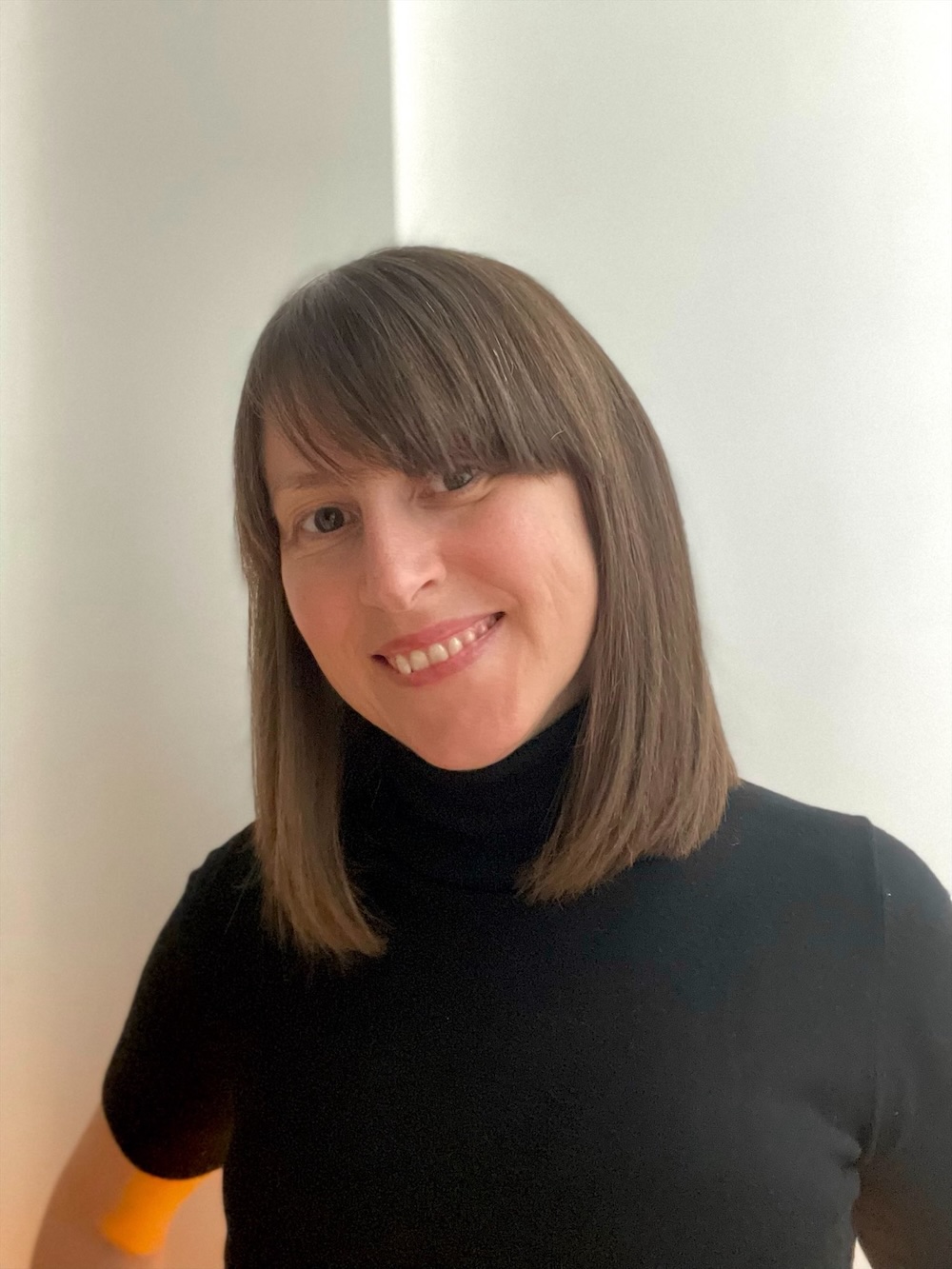
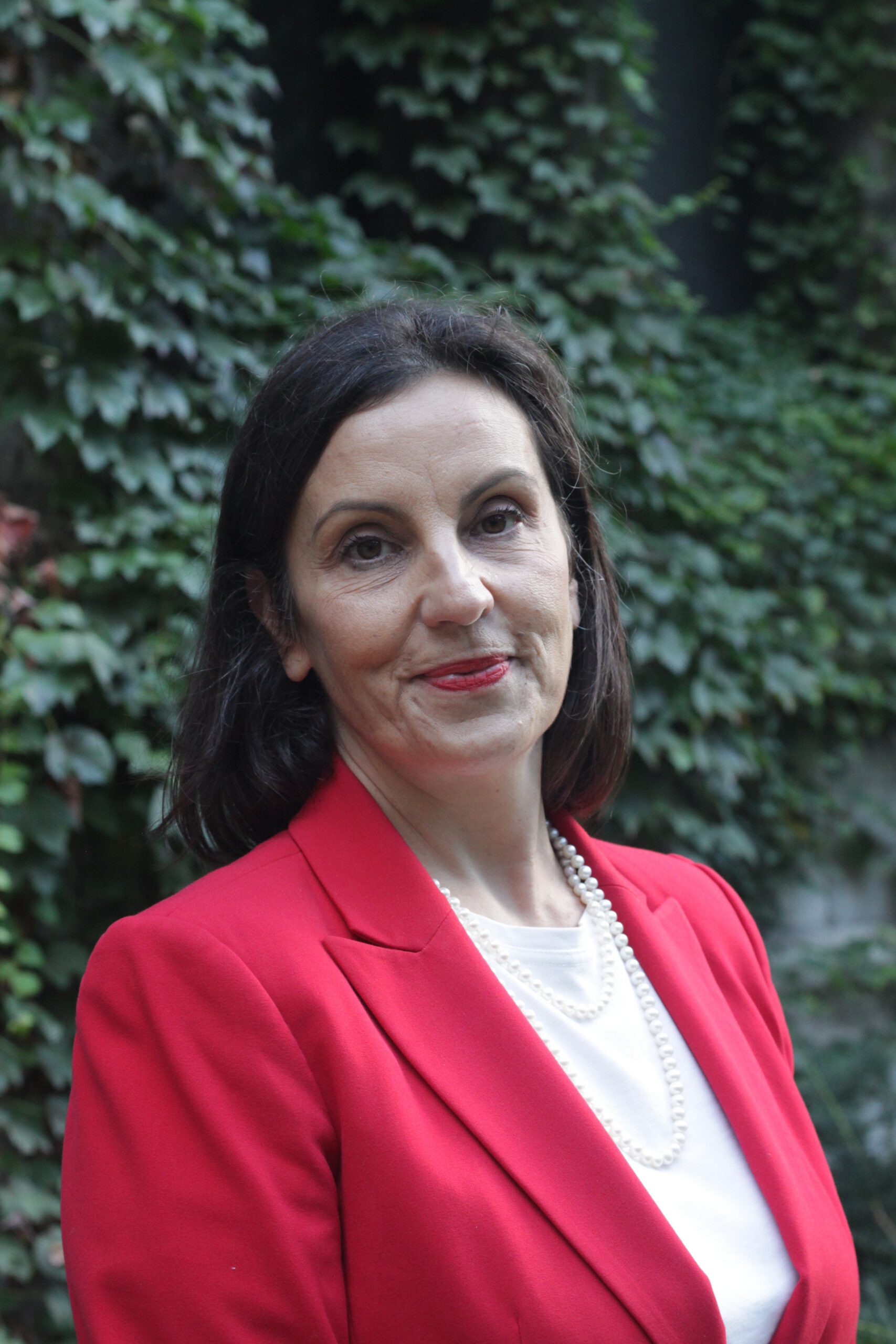
Dr Mhairi Aitken is Senior Ethics Fellow at The Alan Turing Institute (the UK’s national institute for AI and data science), a Visiting Senior Lecturer at the Digital Environment Research Institute, Queen Mary University of London and an Honorary Senior Fellow at the University of Wollongong, Australia. At the Alan Turing Institute Mhairi leads research on children and AI, as well as working across a range of topics including data justice, ethics of Generative AI and emerging AI policy and regulation. Mhairi was included in the international list of “100 Brilliant Women in AI Ethics” and is a frequent contributor to media discussions around AI and data. She is the moderator of the “Age-Appropriate AI Design Panel”.
2025
Dr Lida Arnellou
Dr. Lida Arnellou is Research Scientist at the Institute of Informatics and Telecommunications at NCSR “Demokritos”. She leads the ARTIFACT (Artificial Intelligence for Culture) research group within the institute’s Intelligent Information Systems division. The ARTIFACT group operates at the intersection of technology and culture, focusing on the creation of technology-driven cultural experiences and the advanced digitization of cultural heritage. Dr. Arnellou is also the Curator and Coordinator of AiTHERION, an innovative cultural space dedicated to exploring the intersection of ancient Greek philosophy and emerging technologies. A collaborative initiative between NCSR Demokritos and the Greek Ministry of Culture, AiTHERION fosters public dialogue, inspires philosophical reflection in daily life, and raises awareness of contemporary techno-ethical challenges. As an Open Lab, AiTHERION serves as a dynamic testbed for advanced cultural technologies. Through her work, Dr. Arnellou bridges the gap between cutting-edge technology and cultural heritage, fostering meaningful connections that enrich both the research community and society at large.
Asst Prof David Bickham
Assistant Professor in Adolescent/Young Adult Medicine at Boston Children’s Hospital (BCH) and in Pediatrics at Harvard Medical School (HMS) David S. Bickham, Ph.D. is Research Director at the Digital Wellness Lab at Boston Children’s Hospital, Director of Fellowship Training in the Division of Adolescent Health, and an Assistant Professor of Pediatrics at Harvard Medical School. Hailing from Wellsboro Pennsylvania, Dr. Bickham went on to earn his BA in psychology from Haverford College, followed by his MA and PhD in Human Ecology from the University of Texas. His work explores the intersection between young people’s media use and their health and development. Dr. Bickham uses a variety of methodologies including large surveys, Ecological Momentary Assessment, and qualitative techniques to examine how specific aspects of social media and other technology may alleviate or aggravate symptoms of depression and other mental health problems. His investigations with clinical samples from the Clinic for Interactive Media and Internet Disorders (CIMAID) examine the individual and contextual factors that predispose adolescents to experience Problematic Interactive Media Use. Dr. Bickham has authored numerous research articles and book chapters, has worked with numerous tech companies to improve the mental health of their users, and has testified to federal and state lawmakers about topics related to media and health.
Ms Eugenia Bozou
Eugenia Bozou is leading Google’s public policy and government relations in Greece, Cyprus, and Malta since 2022. She is a highly experienced corporate communications professional with a significant tenure in the technology industry, combined with a strong background in journalism, contributing to major Greek publications. Her career includes leadership positions in Communications and CSR at Microsoft and APIVITA SA. When not shaping policy, Eugenia enjoys quality time with her son, and loves books, sailing, riding her bicycle, time with friends and listening to music. Born and raised in Athens, studied European and International Economic Affairs at AUEB and she remains deeply connected to her roots and the city.
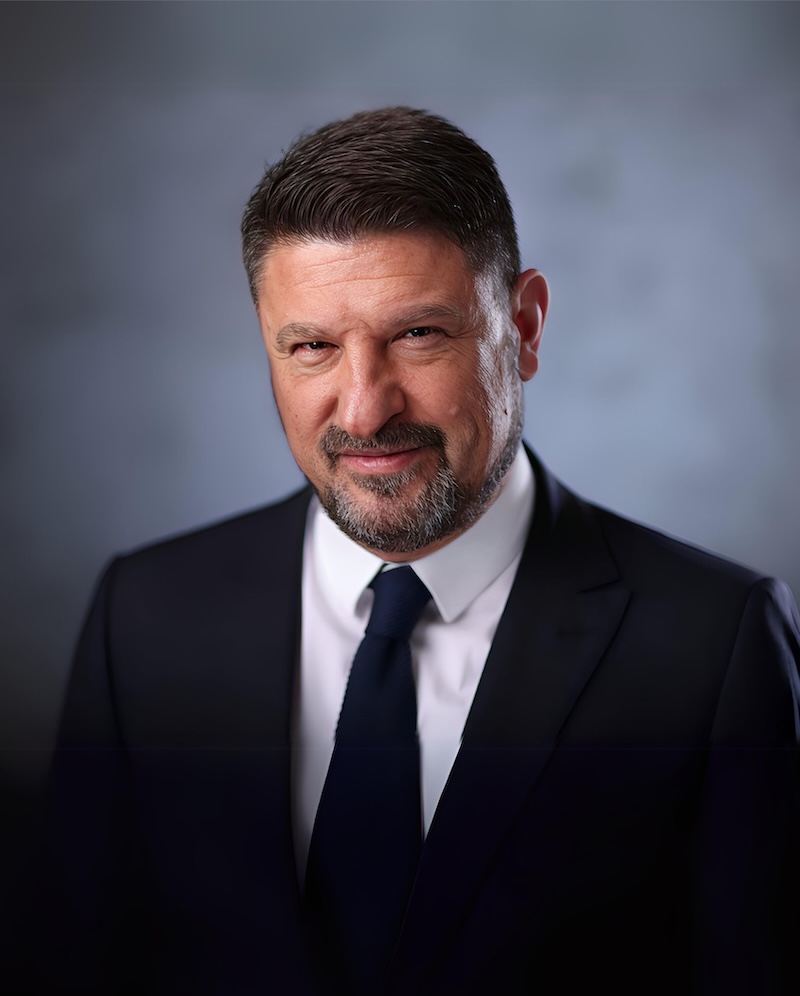
Mr Nikos Chardalias
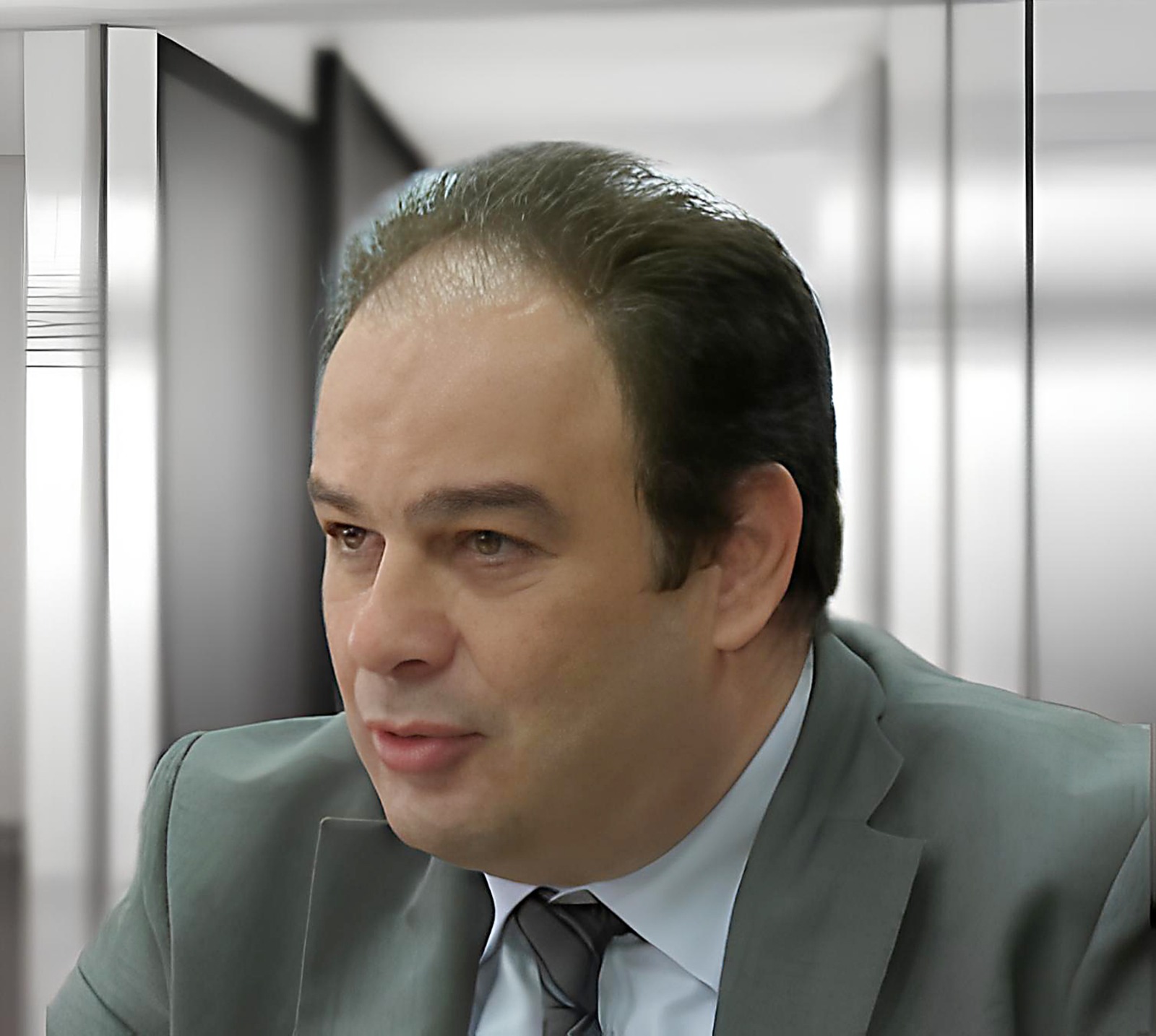
My political journey began in 2003, when I was first elected as Mayor of Vyronas, a neighboring municipality to Athens city of 59.134 inhabitants, while serving in office for three consecutive terms (2003-2012). This experience was fundamental in molding my perception of the day-to-day operations of local government. During my mandate, I had the honor to serve as President of the Union for the Protection and Development of Hymettus Mountain – SPAY (2003-2014), and Chairman of the Civil Protection Committee of the Central Union of Municipalities of Greece – KEDE (2006-2012). This background has equipped me with decisive technical knowledge to advocate for policies such as regional sustainability, environmental protection and crisis management. Furthermore, from 2014 to 2019, I was elected as Regional Councilor of the Attica Region, while serving as the Executive Secretary of the Region of Central Greece (2014-2016). In 2019, after a personal invitation made by Prime Minister Kyriakos Mitsotakis, I transitioned to central government when I was appointed Secretary General for Civil Protection. In March 2020, during the outburst of the Covid-19 pandemic crisis, I assumed the role of Deputy Minister of Civil Protection and Crisis Management and I was designated as head of the national task force (ministerial committee). Subsequently, I coordinated the national response to the pandemic, facilitating the proper distribution of medical supplies, as well as overseeing the implementation of lockdown measures. This unprecedented crisis underpinned the critical importance of coordination between all government levels in times of emergency. Furthermore, from 2021 to 2023, I held the position of Deputy Minister of National Defense and Security. During my tenure, I was responsible for overseeing national defense policies and managing military resources, as head of the national military operations during the Sudan crisis, the Ukrainian war and the Turkish-Libyan crisis. Additionally, I participated in EU Council Ministerial Meetings, engaging in ongoing dialogues with fellow EU Ministers to protect Greece’s strategic interests and contribute to regional stability. In 2023, following a personal invitation by Prime Minister Kyriakos Mitsotakis, I was elected as Governor of the Attica Region in the first round, receiving 46.74% of the total votes. Attica is a coastal regional area, producing 48% of the national GDP, hosting 42% of employment positions, while accommodating over 4.000.000 citizens, representing 45% of the total Greek population. A year into my tenure as Governor of the Attica Region, I was elected 1st Vice President to the EPP Group in the European Committee of the Regions. This position allows me to participate decisively in the process of policy making regarding sustainable regional development, furthering cohesion policies and empowering resilience among the diverse areas within the EU.
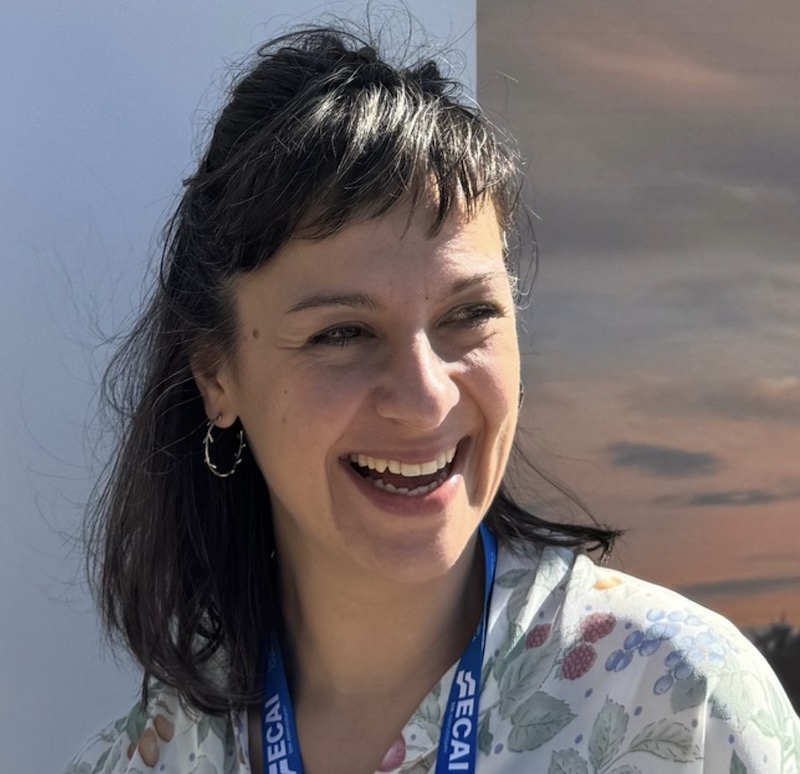
Ms Vicky Charisi
Vicky Charisi is a Research Fellow at Harvard University, Berkman Klein Centre and an incoming Research Scientist at MIT, Singapore-MIT Alliance for Research and Technology. Her work focuses on (i) the impact of AI on child development, (ii) the design of age-appropriate AI systems for children’s well-being, and (iii) evidence-based policy support on AI and children’s rights. For the implementation of her work, Vicky collaborates with the HONDA Research Institute, Japan and with multiple international organizations, such as the UN, OECD and IEEE SA. Previously, Vicky worked as a Scientific Officer at the European Commission. She has published more than 60 academic papers and won multiple awards and recognitions.
Ms Vicky Charisi presents her work at the Young Scholars Session.
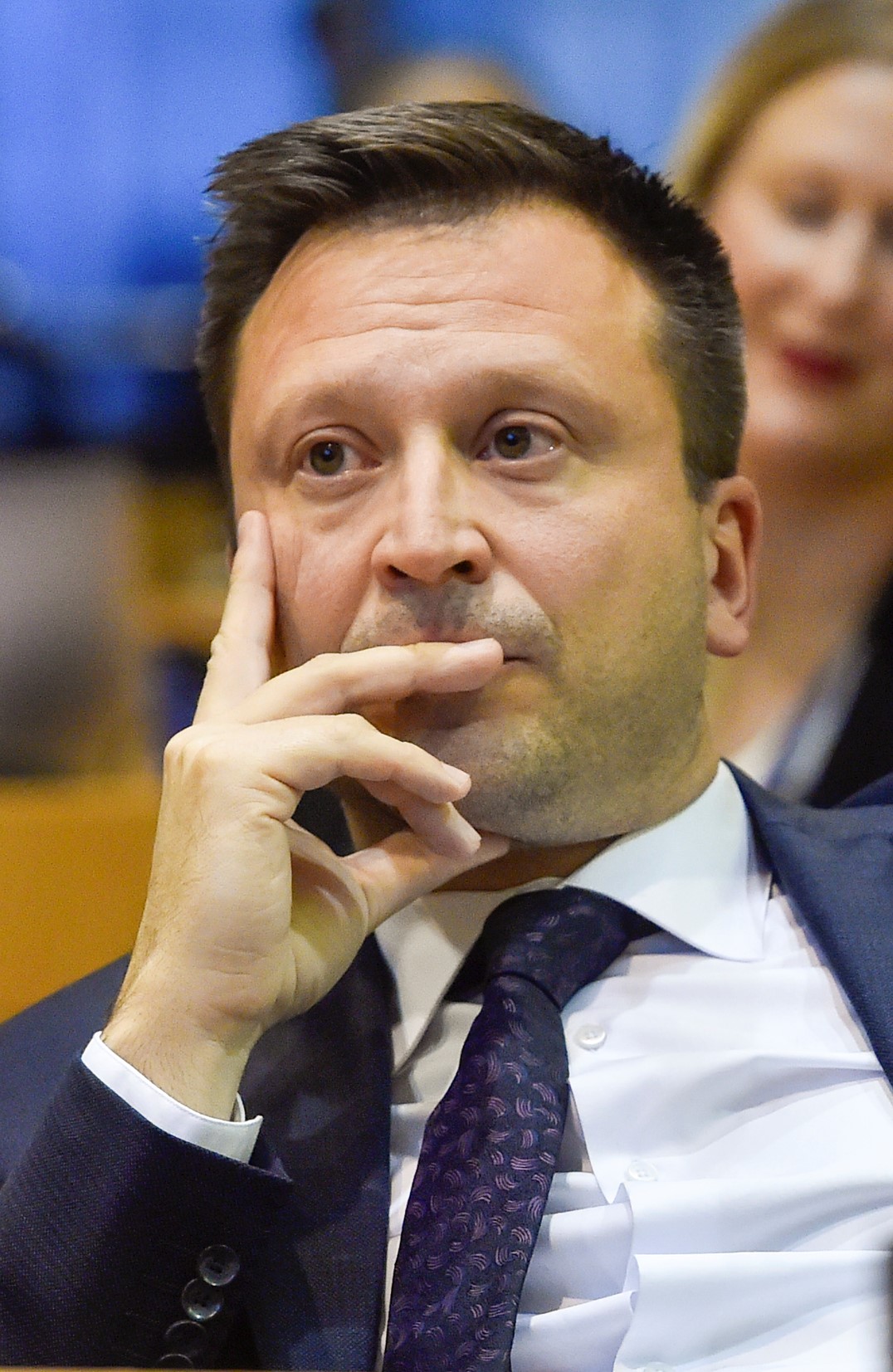
Mr Juraj Čorba
Juraj Čorba, acting Co-Chair of The Global Partnership on AI and acting Chair of OECD Working Party on Governance of AI (AIGO OECD). Juraj is responsible for digital regulation and governance at the Ministry of Informatisation, Slovakia (expert position). Juraj has led negotiations on expert level on behalf of Slovakia on the EU´s AI Act at the Council of the EU, on the international Convention on Artificial Intelligence, Human Rights, Democracy and the Rule of Law at the Committee on AI at the Council of Europe and on the 2024 UN Digital Compact. Chair of the Reflection Group of European policy makers on general purpose AI/foundation models, operationally supported by The Future Society. Former agent of Slovakia before the Court of Justice of the EU and former practising private legal counsel specialising in EU economic regulatory affairs. Studied law and political science (Comenius University, Bratislava; Institute of Advanced Legal Studies, University of London). Author of script of graphic novel on moral and professional dilemmas related to use of AI (Všetky tie svety (All Those Worlds), SLOVART, 2019).
Dr Maria Dagioglou
Maria Dagioglou is a collaborating researcher at the Institute of Informatics and Telecommunications (IIT), NCSR Demokritos. Her research interests include the design and development of AI methods, as well as the understanding of human behavior, for safe, transparent and fluent human-AI and human-robot collaboration. She studied Electrical and Computer Engineering (Democritus University of Thrace, GR). She holds a MSc in Biomedical Engineering (TU Delft, NL) and a PhD in Psychology (University of Birmingham, UK). She lectures on topics related to human factors in AI ethics and human-robot interaction, in the context of two interdepartamental Masters of Science of IIT (MSc in AI, MSc in Data Science). She is actively involved in initiatives related to AI ethics, including being a member of the High-level Expert Group of Artificial Intelligence appointed by the National Commission for Bioethics and Technoethics and being IEEE CertifAIEd AI Ethics Lead Assessor. She was the special secretary of the Hellenic Artificial Intelligence Society (EETN) between 2023-2024.
Asst Prof Spyridon Doukakis
Spyros Doukakis completed undergraduate studies in Mathematics at the University of Patras and at the University of Amsterdam (with a scholarship from the State Scholarships Foundation). He also holds a second degree in Computer Science from the University of West Attica.
He pursued postgraduate studies in “Computer Communications and Networks” at Leeds Beckett University (UK), in “Basic and Applied Cognitive Science” through the inter-institutional program of the National and Kapodistrian University of Athens (NKUA) and the Athens University of Economics and Business (AUEB), and in “Education Studies” at the Hellenic Open University (HOU).
Following the completion of his PhD in Education with a focus on digital technologies at the University of the Aegean, he conducted postdoctoral research in educational neuroscience at the Ionian University.
He currently serves as Assistant Professor in the Department of Informatics at the Ionian University. Since August 2023, he has been serving as President of the Institute of Educational Policy.
He has worked as Head of the academic department and educator at the American College of Greece, as a special advisor on professional development for teachers at the Institute of Educational Policy, Asst Professor of Digital Technologies in Education, Ionian University and has taught in undergraduate and postgraduate programs at the HOU, the University of Thessaly, the former TEI of Athens, ASPAITE (School of Pedagogical and Technological Education), and the Hellenic Police Academy.
He received a Fulbright scholarship for research in the United States and was awarded the Excellence in Teaching Award by the Harvard Club of Boston.
His research interests include computer science education, educational neuroscience, distance learning, and educational technology.
Prof Zoe Gavriilidou
Zoe Gavriilidou is Professor of Linguistics at Democritus University of Thrace. She earned her degree in Philology from the Aristotle University of Thessaloniki and her PhD in Linguistics from the University of Paris XIII. She also serves as a Visiting Professor at the University of Chicago. She has played a key role in reforming the Greek language and literature curriculum for the New School (21st Century School). In 2022, she authored the curriculum for teaching Greek as a heritage language in the United States, commissioned by the Greek Orthodox Archdiocese of America. An experienced author and editor, she has written nine books, published over 140 articles in academic journals, and edited 17 collective volumes. In funded research projects, she has acted as scientific coordinator and led focused research teams. She is committed to the public humanities, a field dedicated to bridging the gap between academic research and society by fostering understanding, appreciation, and the practical application of the humanities in everyday life. Her current focus is Artificial Intelligence (AI) literacy and curriculum development for integrating AI into education. She has partnered with schools on “school of the future” initiatives and delivered numerous professional-development workshops to empower teachers with competencies for future literacies.
Prof Anastasia Giannakidou
Anastasia Giannakidou is the Frank J. McLoraine Professor of Linguistics and the College at the University of Chicago, director of the Center for Hellenic Studies, and co-director of the University’s Center for Gesture, Sign and Language. She has been a Fellow of the Royal Dutch Academy of Sciences, and served at the Faculty Board of the University’s Institute for the Formation of Knowledge. Prof. Giannakidou works at the intersection of linguistic semantics and (modern and classical) philosophy of language, and studies how meaning is reflected in grammar, how speakers use language to persuade and deceive, and what ultimately the relation is between language, thought and reality. Besides Greek, she has done comparative work on Dutch, Italian, French, Spanish, Basque, Korean, and Mandarin Chinese. She is the author of more than 250 articles in scientific journals and edited volumes, and has published five books. Prof. Gianankidou’s work has received multiple international recognitions. In her most recent book, Truth and Veridicality in Grammar and Thought, with the University of Chicago Press (in collaboration with Alda Mari), Prof. Giannakidou concentrates on the question of how truth judgments are formed, and to what extent they affect grammatical phenomena such as mood choice (subjunctive -indicative) in European languages.
Dr Wayne Holmes
Wayne Holmes (PhD, University of Oxford) is Professor of Critical Studies of Artificial Intelligence and Education in the IOE (UCL’s Faculty of Education and Society), University College London. He also holds a UNESCO Chair in the Ethics of Artificial Intelligence and Education (International Research Centre on Artificial Intelligence, Slovenia). His research explores the ethical, human rights, and social justice implications of teaching and learning with and about Artificial Intelligence (AI&ED). Wayne is a lead member of the Council of Europe’s AI&ED expert group (which is developing legislation to protect the human rights of students and teachers engaging with AI systems), a consultant for UNESCO, and an expert for the United Nations, the EU JRC, and the Ministries of Education of Portugal and Cyprus. Wayne has written extensively about AI&ED and has given keynotes in more than 20 countries around the world.