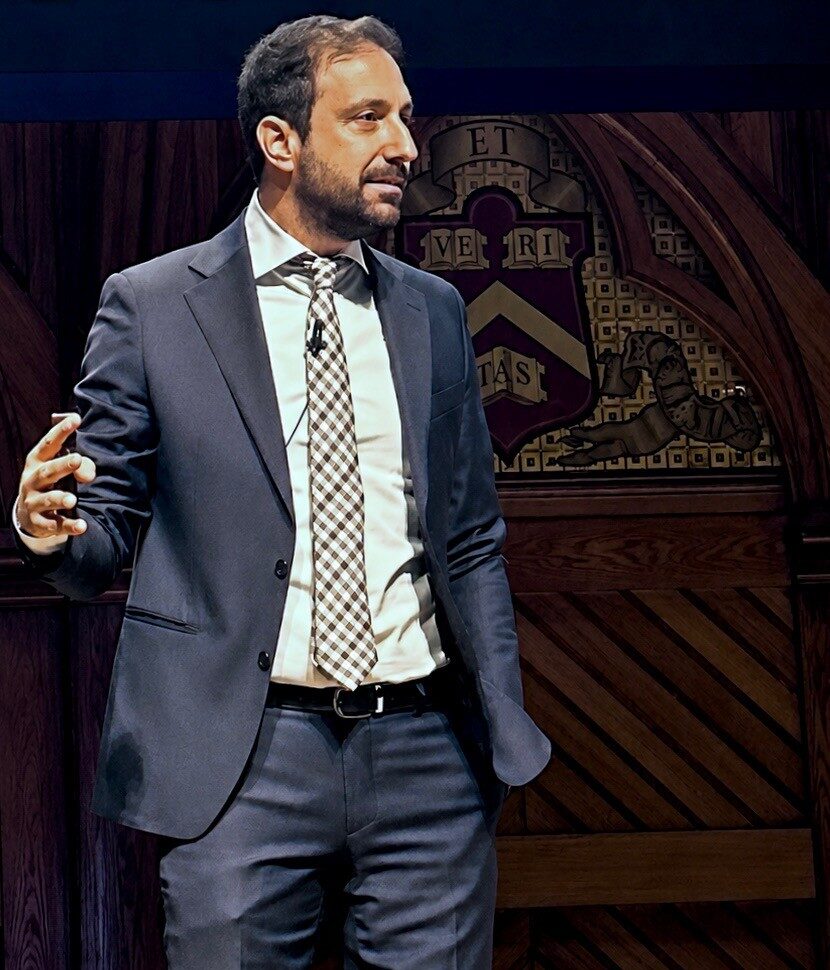
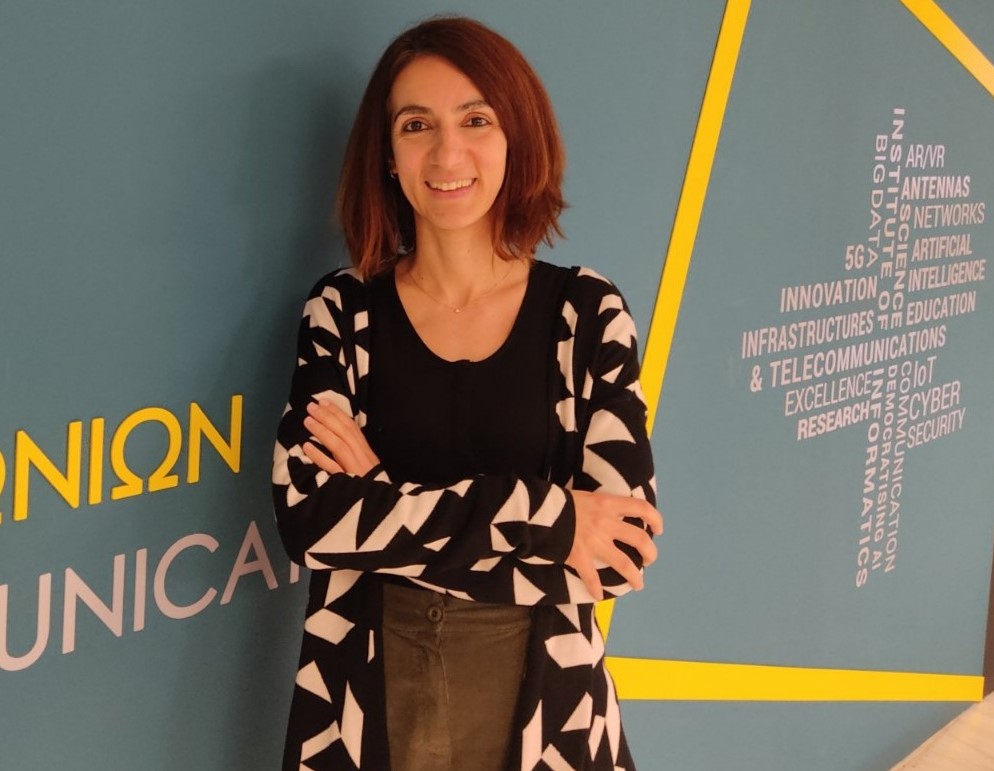
Sergio Imparato is a Lecturer in Government and Assistant Director of Undergraduate Studies in the Department of Government at Harvard University. He also teaches at Harvard Extension School, Harvard Summer School, and Harvard’s Stem Cell and Regenerative Biology Department. Dr. Imparato’s primary field of research explores the intersection of ethics, technology, and policy, with a particular emphasis on the ethical implications of emerging technologies in healthcare, artificial intelligence, and civics. Dr. Imparato is interested in how these advancements shape our understanding of human relationships, societal norms and the future of governance. While at Harvard, Dr. Imparato was awarded many teaching awards and was chosen twice among the “12 best professors at Harvard” to give a lecture at “Harvard Lectures that Last”. He is the recipient of the Harvard Certificate of Distinction in Teaching, the Harvard Certificate of Teaching Excellence, and the Dean’s Commendation for Distinguished Teaching Performance.
2025
Dr Ing Konstantinos Karachalios
A globally recognized leader in standards development and intellectual property, Prof. Dr Ing. Konstantinos Karachalios was the managing director of the Institute of Electrical and Electronics Engineers Standards Association (IEEE SA) and a member of the IEEE Management Council. As the leader of an organization that impacts the lives and imaginations of almost every person on earth, he was constantly pushing the global techno-scientific community to accept their share of responsibility for the outcomes of the socio-technical systems we create. This involves challenging and reframing the commonly-held belief that science and technology are neutral, and instead adopting a paradigm of enhanced awareness and holistic responsibility. To this end, he worked to create appropriate methods and tools to move from principles and good intentions to practically implemented frameworks and solutions. For example, his efforts have contributed to the proliferation of “AI Ethics” and technology ethics more generally, as well as the passage of legislation in the UK, California, Maryland and Indonesia around Age-Appropriate Design Codes for internet platforms. These codes seek to protect children’s online data, protect them from online addiction and pave the way for global governance systems for ICT platforms and the internet as a whole, moving beyond its “wild west” era. Recently, Konstantinos has taken the Chair role for a new pioneering initiative – Resilient Futures Consortium (RFC), a worldwide alliance of visionary organizations and individuals, united by the urgent need to address the multifaceted challenges that define our time. RFC’s mission is to inspire action, facilitate knowledge exchange, promote agency, and advocate for standards and policies that ensure a prosperous future for all. The first coalition was initiated in partnership with OECD other partners as a global challenge Building Trust in the Age of Generative AI. Before IEEE, Konstantinos played a crucial role in successful French-German cooperation in coordinated research and scenario simulation for large-scale nuclear reactor accidents. And with the European Patent Office, his experience included establishing EPO’s patent academy, the department for delivering technical assistance for developing countries and the public policy department, serving as an envoy to multiple U.N. organizations. Konstantinos earned a Ph.D. in energy engineering (nuclear reactor safety) and masters in mechanical engineering from the University of Stuttgart.
Prof Despoina Karakatsani
Despoina Karakatsani studied at the School of Philosophy of the University of Athens and went on to complete postgraduate studies in Educational Sciences at the University of Paris 8–Saint-Denis–Vincennes and in the Didactics of History and Geography at the University of Paris 7–Jussieu. In 1998, she completed her PhD in the field of Educational Sciences at the University of Paris 8–Saint-Denis.
From 1998 to 2000, she taught at the University of Crete and the Democritus University of Thrace. In 2000, she was appointed to the Department of Philosophical and Social Studies at the University of Crete, and since 2004 she has been teaching at the Department of Social and Educational Policy at the University of the Peloponnese, as well as at the Hellenic Open University (HOU) since 2006.
She served as Chair of the Department of Social and Educational Policy at the University of the Peloponnese from 2015 to 2019, as Chair of the European network CiCe – Children’s Identity and Citizenship in Europe from 2016 to 2018, and as Chair of the Gender Equality Committee of the University of the Peloponnese from 2020 to 2022. Since 2024, she has been the Head of the Laboratory for the Study of Gender, Inequalities, and Discrimination in the same department.
She is a board member of the DARE Network (Democracy and Human Rights Education in Europe) and a member of the management committee of the HIDDEN program (History of Identity Documentation in European Nations: Citizenship, Nationality, and Migration), under the European Cooperation in Science and Technology – COST.
Her research interests include the history of educational theories and institutions, institutional pedagogy and the Freinet method, citizenship education, and intercultural education.
She is the moderator of the “AI and Education Panel”.
Dr Vangelis Karkaletsis
Dr Karkaletsis is the Director of the Institute of Informatics & Telecommunications at NCSR Demokritos, and a member of the High Level Advisory Committee on AI to the Greek Prime Minister. Also member of the National Commission for Bioethics & Technoethics and the Expert Group on AI Incidents at OECD.AI. Previously Member of the National Council for Research and Innovation (ESETEK) and Head of the Software & Knowledge Engineering Lab (SKEL The AI Lab) at IIT. Coordinator, scientific and technical manager of many European and national projects and organiser of numerous scientific international conferences, workshops and summer schools. For more than 10 years he was responsible for the Institute’s educational activities, and initiated joint PhD scholarships programmes with several Universities abroad. He launched the Masters programmes for NCSR Demokritos in collaboration with Greek Universities (MSc in Data Science and MSc in Artificial Intelligence), and set up the initial educational programme for primary and secondary schools visiting the research centre. His research interests are in the areas of Artificial Intelligence, content analysis, big data management, knowledge representation, human-machine interaction.
Dr Dora Katsamori
Dora Katsamori is an Associate Researcher at the Institute of Informatics and Telecommunications (IIT), NCSR ‘Demokritos’. Her research interests concern AI & Education, media Literacy and citizens engagement with a focus on children and youth. She studied Political Science and Public Administration (University of Athens). She holds a MSc in Social Discrimination, Immigration and Citizenship (Un. of Peloponnese) and a PhD in Citizenship Education (Un. of Peloponnese). She lectures on topics in the field of Social Pedagogy at the Department of Educational Sciences and Social Work, University of Patras and in the field of Citizenship and inclusion in the context of Master programs. She is actively involved in initiatives related to AI & Education, including being a member of EU and CoE working groups as well as contributing in relative research activities of working groups in national level.
Baroness Beeban Kidron
Baroness Kidron is a leading voice on children’s rights in the digital environment and a global authority on digital regulation and accountability. She has played a determinative role in establishing standards for online safety and privacy across the world. Baroness Kidron sits as a crossbench peer in the UK’s House of Lords. She is an advisor to the Institute for Ethics in AI, University of Oxford, a Commissioner on the UN Broadband Commission for Sustainable Development, an expert advisor for the UN Secretary-General’s High-Level Advisory Body on Artificial Intelligence, and Founder and Chair of 5Rights Foundation. She is a Visiting Professor of Practice at the London School of Economics, where she chairs the research centre Digital Futures for Children, and a Fellow in the Department of Computer Science, University of Oxford. Before being appointed to the Lords she was an award-winning film director and co-founder of the charity Filmclub (now Into Film).
Dr Giorgos Kosteletos
Georgios Kosteletos is a adjunct lecturer at the Department of Philosophy of the National and Kapodistrian University of Athens (NKUA) and at the Open University of Cyprus. He also serves as Vice Chair of the Research Ethics and Deontology Committee at the National Centre for Scientific Research “Demokritos,” and is a member of the expert group on Artificial Intelligence of the National Commission for Bioethics and Technoethics.
He is a research fellow at the Applied Philosophy Research Lab (Department of Philosophy, NKUA) and at the Psychophysiology Laboratory of theUniversity Mental Health, Neurosciences and Precision Medicine Research Institute “Costas Stefanis” (NKUA). He has previously been a research fellow with academic scholarship at the Medical School of NKUA, conducting research on the neuroscientific mechanisms underlying moral cognition.
He holds a PhD in Philosophy (Division of Philosophy, Department of Philosophy, Pedagogy and Psychology, NKUA), with a dissertation focused on the Philosophy of Artificial Intelligence. He also holds an MSc in Music Technology from the University of York and a BSc in Physics from the Department of Physics at NKUA.
His scientific fields of interest include the Philosophy of Artificial Intelligence and Neuroscience, as well as Moral Philosophy. His research focuses on the philosophical – particularly ethical – issues arising from contemporary AI research and applications, as well as the experimental study of the neuroscientific dimensions of moral cognition.
Ms Hannah Kunzman
Hannah Kunzman is a doctoral candidate at Harvard University, specializing in normative political theory and the history of political thought. Her research interests include agency, responsibility, and education, and she has worked on projects related to civic education as part of Harvard’s Allen Lab for Democracy Renovation and the Task Force on the Value of Experiential Civic Learning. Her dissertation project is about childhood, what it means to grow up, and the relationship between freedom and dependence.
Ms Hannah Kunzman presents her work at the Young Scholars Session.
Title: A Care Ethical Approach to Children’s Agency in the Age of AI
Abstract: Traditional philosophical conceptions of agency, which foreground autonomy, see children as diminished or incomplete agents. Tamar Schapiro, for example, argues that children have a “half-full/half-empty” status in the moral community: while they are not merely objects—they can, for example, make claims upon adults to protect their interests or provide for them in certain ways—they also are not full agents because their actions are not yet entirely their own. Children’s diminished status as agents is what justifies adults’ “asymmetric authority” to “check and regulate” children’s behavior. This conception of children’s agency tends to focus on the ways in which they are exceptions to a standard picture of the agent and the ways in which adults can justifiably direct children’s behavior. Considering the challenge of children and AI through this understanding of childhood agency leads us to focus on the ways in which their diminished rational capacity might necessitate legal or social protections. But this approach misses some of what makes thinking about children’s relationship to AI a special challenge. One of the strange reversals generated by this technological era is that young people tend to use tools like AI more adeptly and more frequently than their parents and other adults. In many ways, then, children are thus co-creating this new part of the technological world: they are not merely individuals in need of perfections from its danger, but active participants who may also see parts of it that adults do not. I argue that we can gain productive insights when viewing the question of children and AI through the lens of feminist care ethics, which emphasizes the moral importance of relationships and the responsibilities that emerge from them. A recognition of children’s rights to privacy or freedom of expression may guide the development of laws about children’s tech usage, but it doesn’t fully address the ways in which technology can alter a child’s concrete relationships, which play a vital role in shaping their lives.
The presentation will proceed in three parts. First, I will review prominent philosophical conceptions of the child and child agency. Second, I will explain how an ethics of care can reimagine children’s agency in the AI space to leverage the possibility for responsive relationships. Finally, I will consider how these insights inform contemporary applications of AI systems in children’s education.
Dr Sky Ma
Dr. Sky Ma, PhD, SJD, LLM, is currently a Max Weber Fellow at the European University Institute (EUI), and an incoming postdoctoral researcher at the Max Planck Institute for the Study of Crime, Security and Law. Sky works on comparative criminal justice, law & tech, data privacy, legal profession, and evidence law. Sky’s recent project is about the digital transformation of courts and the use of AI in the judicial decision-making process, adopting a comparative, empirical, and interdisciplinary approach. She examines how different legal systems have integrated digital technologies and AI, comparing their effectiveness, risks, and impact on fundamental human values.
Dr Sky Ma presents her work at the Young Scholars Session.
Prof Lilian Mitrou
Lilian Mitrou is Professor at the University of the Aegean-Greece (Department of Information and Communication Systems Engineering) teaching Data Protection and Information Law. L. Mitrou studied law in Athens and holds a PhD in Data Protection (Supervisor Spiros Simitis -University of Frankfurt-Germany). She is Visiting Professor at the Athens University of Economics and Business (Postgraduate Studies Programs: Information Systems Security/ Data Science/ Business Analytics/ Digital Methods for Humanities) and at the University of Piraeus (Postgraduate Studies Programs: Law and ICT Technologies/ Cybersecurity and AI Technology). She is President of the Institute for Privacy Law, Data Protection and Technology (IPL), established by the European Public Law Organization ( www.eplo.int) and Editor in Chief of “Technology and Communication Law Journal”. She was Advisor to the Greek Prime Minister K. Simitis (Information Society, Public Administration/ Institutions, Independent Administrative/Supervisory Authorities – 1996-2004). From 1999 to 2003 she was Member of the Hellenic Data Protection Authority and from 2016 to 2023 Member of the Greek National Council for Radio and Television (NCRTV). She was/is Member/Chair of many Committees working on law proposals in the fields of privacy and data protection, communications law, e-government, digital governance, artificial intelligence etc. Her professional experience includes senior consulting and researcher positions in a number of private and public institutions and projects on national and international level. L. Mitrou has published books, chapters in books and many journal and conference papers (in English, German and Greek) with focus on privacy, data protection law and legal and ethical issues of Artificial Intelligence.
Ms Alexandra Μitsotaki
Alexandra Mitsotaki is co-founder & president of the World Human Forum, a global citizen initiative which has its symbolic base in Delphi, launching international initiatives from important sites such as Delos, Aristotle’s Lyceum in Athens and Eleusis. In 1998 she founded ActionAid Hellas, the Greek affiliate of ActionAid, the international organisation against poverty and injustice. For the last 10 years she was in charge of the Hellenic Cultural Centre in Paris of which she is now vice-chair. Reacting to the financial crisis in Greece, in 2014 she co-founded Action Finance Initiative, the first microcredit organisation in Greece. She is a member of the High-Level Roundtable of the New European Bauhaus, an initiative of the European Commission aiming to connect the European Green Deal to our living spaces. Her interdisciplinary experience over the past years has made her a profound supporter of the importance of a holistic approach to tackle the big challenges of our time.
Mr Kyriakos Mitsotakis
Kyriakos Mitsotakis was first sworn in as Prime Minister of the Hellenic Republic July 2019 and was re-elected in June 2023. President of Nea Demokratia since January 2016, he managed to modernize his party. As Minister of Administrative Reform and e-Government from June 2013 until January 2015, he spearheaded comprehensive national reforms by implementing a functional reorganization of institutions, structures and processes. A member of the Parliament since 2004, Kyriakos Mitsotakis has participated in the Committee for Constitutional Amendment, the Committee for Trade and the Committee for National Defense and the Environment Committee. He was also an active member of the NATO Parliamentary Assembly. Before entering politics, he worked for ten years in the private sector as a financial analyst with Chase Investment Bank, a consultant with McKinsey and Company and finally as CEO of NBG Venture Capital at the National Bank of Greece. He obtained his bachelor’s degree in Social Studies, summa cum laude, from Harvard University, and earned an MA in International Relations from Stanford University and an MBA from Harvard Business School.